How to Apply for a Good Conduct Certificate in Kenya in 2026: A Complete Step-by-Step Guide
Get High Paying Surveys
Earn money online by completing simple surveys. No experience needed.
Start Earning →Quick Summary
- Apply online via eCitizen at ecitizen.go.ke under the Directorate of Criminal Investigations (DCI)
- Pay a fee of KES 1,050 through the eCitizen platform
- You must visit a DCI-approved fingerprinting centre in person after applying online
- Processing takes 2 to 4 weeks from the date of fingerprint submission
- The certificate is officially called the Certificate of Good Conduct and is issued by the DCI
Introduction
Whether you are applying for a job, a study visa, a professional licence, or citizenship in another country, one document will almost certainly be requested — the Certificate of Good Conduct. In Kenya, this is the official police clearance document that confirms you have no criminal record (or discloses any record that exists).
Knowing how to apply for a good conduct certificate in Kenya saves you from the confusion, long queues, and frustration that come from showing up unprepared. The process has moved largely online through the eCitizen platform, but there is still a mandatory in-person step for fingerprinting that you must plan for.
This guide covers every step of the 2026 application process — from creating your eCitizen account to collecting your certificate — including what documents to carry, how much to pay, where to get fingerprinted, and what to do if your application is delayed.
What Is a Certificate of Good Conduct in Kenya?
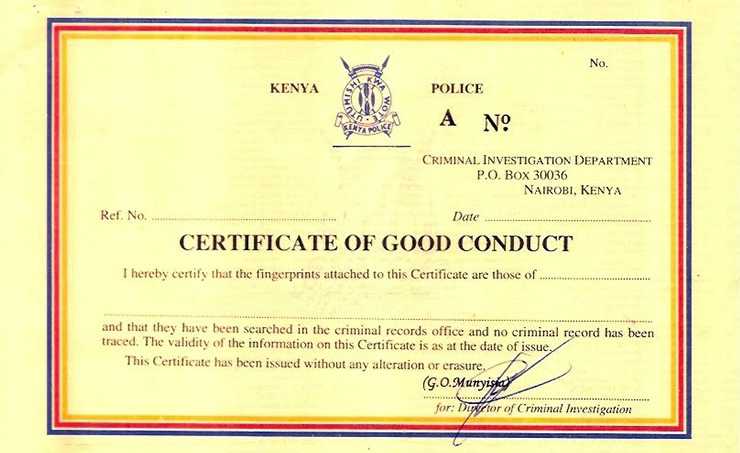
A Certificate of Good Conduct (also called a DCI clearance certificate or police clearance certificate) is an official government document issued by the Directorate of Criminal Investigations (DCI) — formerly the Criminal Investigation Department (CID). It confirms whether the applicant has any criminal history recorded in Kenya’s national criminal database.
The certificate shows one of two outcomes:
- No criminal record — the most common result for applicants with a clean history
- Criminal record disclosed — lists any convictions, pending charges, or criminal history on file
The certificate is valid for one year from the date of issue.
Who Needs a Certificate of Good Conduct in Kenya?
You will need this document if you are:
- Applying for a job — especially in education, healthcare, finance, security, or government
- Applying for a work permit or visa to travel or work abroad
- Seeking citizenship or permanent residency in another country
- Applying for a professional licence (e.g., law, nursing, teaching)
- Bidding for government tenders
- Adopting a child (required by adoption agencies)
- Joining the Kenya Defence Forces, National Police Service, or other uniformed services
- Applying to study abroad at institutions that require police clearance
Documents Required for a Good Conduct Certificate Application
Having your documents in order before you start will make the whole process smooth. Here is what you need:
For Kenyan Citizens (Adults — 18 Years and Above)
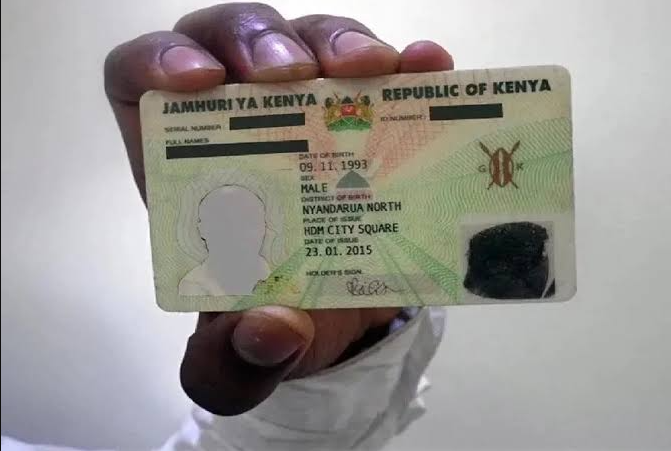
- Original National Identity Card (ID) — must be valid and not defaced or torn
- Copy of your National ID (both sides, clear and legible)
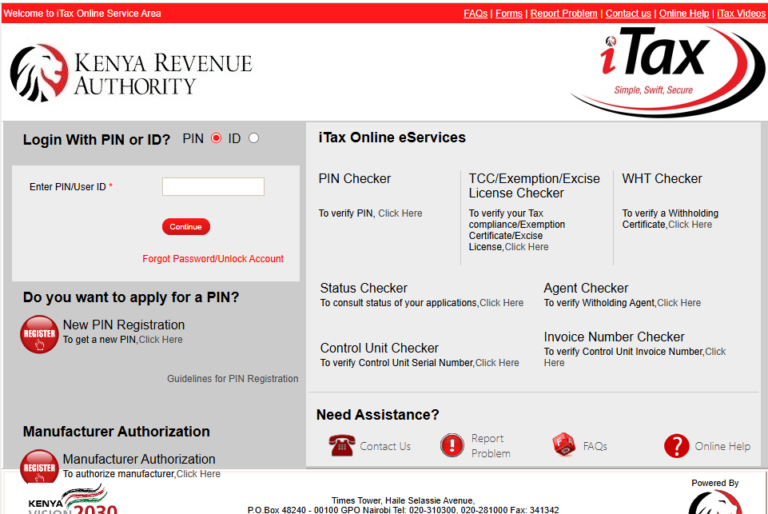
- KRA PIN Certificate — mandatory; register at itax.kra.go.ke if you do not have one
- eCitizen payment receipt — proof of the KES 1,050 fee paid online
- Passport-size photograph — some DCI offices require one; carry at least two just in case
For Kenyan Citizens Living Abroad (Diaspora Applicants)
- Valid Kenyan passport (in place of the National ID)
- Copy of passport data page
- You may apply through the nearest Kenyan Embassy or High Commission, which coordinates with DCI Nairobi
For Foreign Nationals Residing in Kenya
- Valid passport (original and copy of data page)
- Valid work permit, student pass, or residence permit
- Alien ID (if applicable)
For Minors (Under 18 Years)
- Original Birth Certificate
- Parent or guardian’s National ID
- Applications for minors are rare but handled on a case-by-case basis at the DCI offices
See also: How to Apply for a KRA PIN in Kenya | How to Apply for a Kenyan Passport
Fees for a Certificate of Good Conduct in Kenya (2026)
The application fee is straightforward:
| Service | Fee (KES) |
|---|---|
| Certificate of Good Conduct (standard) | KES 1,050 |
| Apostille Authentication (Ministry of Foreign Affairs) | Separate fee — confirm at the Ministry |
Payment is made exclusively through eCitizen — do not pay anyone in cash at the DCI office or at a fingerprinting centre. If anyone asks you to pay cash outside the eCitizen system, that is not an official charge.
The KES 1,050 covers the full application, fingerprint processing, and certificate issuance.
Get High Paying Surveys
Earn money online by completing simple surveys. No experience needed.
Start Earning →Where Are DCI Fingerprinting Centres in Kenya?
After applying online, you must physically visit a DCI-approved fingerprinting centre to have your fingerprints captured. The DCI has centres across the country:
Nairobi Region:
- DCI Headquarters — Kiambu Road, Nairobi (the main fingerprinting centre)
- DCI Gigiri Office
- Selected DCI county offices within Nairobi
Other Counties (Selected Locations):
- Mombasa DCI Regional Office
- Kisumu DCI Regional Office
- Nakuru DCI Regional Office
- Eldoret (Uasin Gishu) DCI Office
- Nyeri DCI Regional Office
- Kisii, Garissa, Embu, Machakos, Meru, and other county DCI offices
When you complete your eCitizen application, you will be asked to select your preferred fingerprinting centre. Choose the one closest to you. You do not have to travel to Nairobi if you are in another county — regional offices handle the full process.
How to Apply for a Good Conduct Certificate in Kenya: Step-by-Step
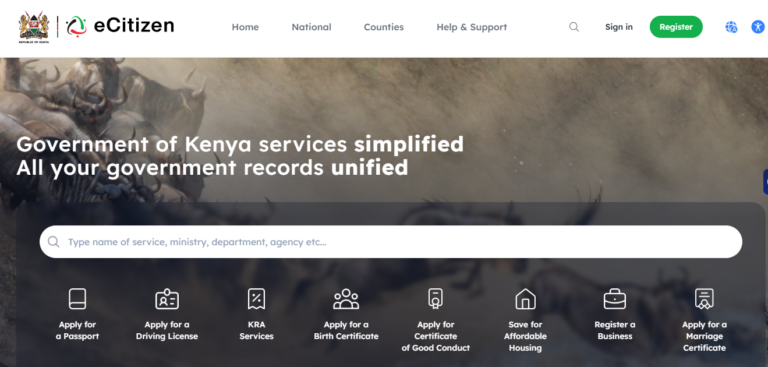
Step 1: Create or Log In to Your eCitizen Account
Open your browser and go to ecitizen.go.ke. If you are a new user, click “Register” and fill in your National ID number, full name, email address, and phone number. You will receive a verification SMS — enter the code to activate your account.
If you already have an eCitizen account (used for passport, business registration, or other services), simply log in with your existing credentials.
Tip: Use the same phone number and email that are registered with your National ID records. Mismatches can cause verification problems later.
Step 2: Navigate to the DCI Service
Once logged in, you will see the eCitizen dashboard listing various government agencies. Look for “Directorate of Criminal Investigations (DCI)” and click on it.
From the list of services displayed, select “Certificate of Good Conduct.”
Step 3: Fill in the Online Application Form
A digital application form will load. Fill in all required fields carefully:
- Full name — exactly as it appears on your National ID
- National ID number
- KRA PIN
- Date of birth
- Gender
- County of residence
- Physical address
- Purpose of application — select from the dropdown (e.g., employment, travel, tender, adoption)
- Preferred fingerprinting centre — select your nearest DCI office from the list provided
Double-check every field before moving to the next page. Your name must match your ID exactly — even a single letter difference can cause a rejection or delay.
Step 4: Upload Your Documents
After filling the form, the system will ask you to upload:
- A clear scan or photo of your National ID (front and back)
- Your KRA PIN certificate
- A passport-size photograph (where prompted)
Make sure uploads are:
- Clear, well-lit, and fully legible
- In JPG or PDF format
- Within the file size limit shown on screen (usually 1MB per file)
Blurry or incomplete uploads are among the most common causes of application delays. Take the time to get clean, clear scans before submitting.
Step 5: Pay the Application Fee
After uploading your documents, you will be taken to the payment page. The fee is KES 1,050.
Payment methods accepted on eCitizen:
- M-Pesa — the fastest and most widely used option (pay directly through the eCitizen M-Pesa integration or via Paybill 206206)
- Debit or credit card
- Bank transfer via the eCitizen payment gateway
Once payment is confirmed, you will receive:
- A payment confirmation SMS on your registered number
- An eCitizen application reference number
- A visit slip for the fingerprinting centre you selected
Print or screenshot this slip — you will be required to show it at the DCI fingerprinting centre.
Step 6: Visit the DCI Fingerprinting Centre
This is the mandatory in-person step. You must appear physically at the fingerprinting centre you selected during the online application. There is no way to submit fingerprints remotely — biometric capture must be done in person.
What to carry to the fingerprinting centre:
- Your original National ID — copies are not accepted; officers verify the original
- Your eCitizen payment receipt and application reference slip (printed or shown on your phone)
- Your KRA PIN certificate (original or printed copy)
- Two passport-size photographs (some offices still request these even with digital capture)
What happens at the centre:
- You present your documents at the reception desk or queue area
- An officer verifies your details against the eCitizen system
- Your 10 fingerprints are captured digitally using an electronic scanner — no ink is used at modern DCI centres
- Your photograph may be retaken at the centre
- You are issued a fingerprint capture confirmation slip — keep this safely as proof of attendance
The fingerprinting itself takes about 5 to 10 minutes per person once you are attended to. The wait time, however, depends on the volume of applicants. Arriving before 8:00 AM significantly reduces your waiting time — especially at DCI Headquarters on Kiambu Road, Nairobi, which handles the country’s highest volume.
Step 7: Wait for Processing
After your fingerprints are captured, the DCI processes your application against the national criminal database. This is done entirely by DCI internally — you do not need to take any further action.
Standard processing time is 2 to 4 weeks from the date your fingerprints were taken. During peak periods — particularly June to August when many employers and institutions request clearances — it can take slightly longer.
Track your application status by logging into eCitizen and checking under your active applications. You will also receive an SMS notification when your certificate is ready.
Step 8: Download or Collect Your Certificate
Once your certificate is ready, you have two options:
Option A: Download Online via eCitizen (Recommended)
The DCI now delivers most certificates digitally. Log into your eCitizen account, navigate to your application, and download the Certificate of Good Conduct as a PDF. Print it on A4 paper — the printed version with the DCI watermark and QR code is the valid, official certificate. No lamination is needed, but do not fold or damage it.
Option B: Physical Collection at the DCI Office
If your certificate is not available for download, return to the fingerprinting centre (or the office indicated in your SMS) with your National ID and application reference slip. Collect the physical certificate from the counter.
Note: As of 2026, digital delivery through eCitizen is the primary method across most regions. Always check your eCitizen dashboard before making a return trip to the office.
How to Apply for a Good Conduct Certificate for International Use
If your certificate is needed for use in another country — for immigration, overseas employment, or study — you may need additional authentication:
Apostille Stamp (for Hague Convention countries)
Many countries require the certificate to carry an Apostille stamp, which certifies the document is genuine for international use. After receiving your DCI certificate, take it to the Ministry of Foreign and Diaspora Affairs in Nairobi for apostille processing. This typically takes 3 to 5 working days and attracts a separate government fee. Contact the Ministry to confirm the current fee before visiting.
Notarisation (for non-Hague countries)
If the destination country is not a signatory to the Hague Convention, you may need the certificate notarised by a Commissioner of Oaths or authenticated through that country’s embassy in Kenya. Always confirm the exact requirement with the institution or embassy requesting the document.
Good Conduct Certificate for Diaspora Kenyans
If you are a Kenyan citizen living outside Kenya and need the certificate:
- Apply online via eCitizen from anywhere in the world — the platform is accessible internationally
- For fingerprinting, contact the nearest Kenyan Embassy or High Commission in your country of residence
- The embassy captures your fingerprints and forwards them to DCI Headquarters in Nairobi
- Processing takes approximately 4 to 6 weeks due to international coordination
- The certificate is sent back to the embassy or made available on eCitizen for download
If you are visiting Kenya, completing the entire process locally is faster and more straightforward.
Common Mistakes to Avoid
These are the errors responsible for most application delays and rejections:
- Name mismatch between the form and your ID — Enter your name exactly as it reads on your National ID, including the order. Do not abbreviate or rearrange.
- Paying cash at the DCI office — All payments go through eCitizen only. Anyone asking for cash at the office is not conducting an official transaction.
- Going for fingerprinting without your original National ID — Officers will turn you away without it. A photocopy or phone image of the ID is not sufficient.
- Visiting the wrong fingerprinting centre — You must attend the specific centre you selected in the application. Showing up at a different office will cause delays and may require a new application.
- Uploading blurry or cut-off document scans — Poor-quality uploads are flagged during document review and can stall your application before it reaches fingerprinting.
- Not following up on your application status — Log into eCitizen from day 14 onwards to check for your certificate rather than waiting passively.
- Confusing a Good Conduct Certificate with a Court Clearance Letter — These are two different documents. A court clearance letter is issued by the Judiciary and covers court proceedings. The Good Conduct Certificate covers criminal records held by DCI. Confirm with the requesting institution which one they need.
Tips to Get Your Certificate Faster
- Apply midweek (Tuesday to Thursday) — Mondays see a rush from weekend backlog; Fridays are quieter but some offices close processing early
- Arrive at the fingerprinting centre before 8:00 AM — Early arrivals are attended to first and spend far less time queuing
- Complete your eCitizen form fully before paying — Errors in the form cannot always be corrected after payment without visiting an office
- Keep your phone charged and nearby — The SMS notification for certificate readiness can arrive any time, including on a Friday afternoon
- Check your eCitizen dashboard after two weeks — Certificates are sometimes ready ahead of the stated processing window
- Avoid public holidays and the days immediately after — Processing pauses during national holidays and queues spike on the first day back
Frequently Asked Questions (FAQs)
1. How long does it take to get a good conduct certificate in Kenya in 2026?
After fingerprints are captured, processing takes 2 to 4 weeks. Add the time for your online application and fingerprinting visit, and the full process from start to finish is typically 3 to 5 weeks. Apply well ahead of any deadline — do not start the process the week a document is needed.
2. Can I apply for a good conduct certificate without a KRA PIN?
No. A KRA PIN is mandatory for the eCitizen application. If you do not have one, register for free at itax.kra.go.ke — the process takes about 20 to 30 minutes and is entirely online. Once registered, you can immediately proceed with your good conduct application.
3. Is the Certificate of Good Conduct the same as a police clearance certificate?
Yes. In Kenya, the Certificate of Good Conduct is the country’s official police clearance document. It is also referred to as a DCI clearance certificate or criminal background check. All three descriptions refer to the same document, issued by the Directorate of Criminal Investigations.
4. What if I have a criminal record? Will I be refused the certificate?
The DCI does not refuse to issue the certificate based on your record. They will issue it regardless — but it will disclose your criminal history as it appears in their database. What the employer, immigration office, or institution does with that information is entirely their decision. The DCI simply reports what is on file.
5. Can someone collect my good conduct certificate on my behalf?
The online application can be filled with assistance from another person. However, the fingerprinting step must be done personally by the applicant — no one else can submit your fingerprints on your behalf. Certificate collection may sometimes be done by a representative with a written authorisation letter, but this varies by office — confirm with the specific DCI office beforehand.
6. My certificate has been in processing for more than 4 weeks. What should I do?
Log into eCitizen to check your application status. If it still shows as pending after 4 weeks, visit the DCI fingerprinting centre where you were processed and present your application reference number. Delays sometimes occur when an applicant’s name triggers a manual review against the criminal database — this is routine and does not automatically indicate a criminal record.
7. How long is the Certificate of Good Conduct valid?
The certificate is valid for one year from the date of issue. After expiry, you must reapply from the beginning. Some employers or institutions specify that the certificate must have been issued within the last 3 or 6 months — always confirm the requirement with whoever is requesting the document.
Conclusion: Apply Early and Be Prepared
A Certificate of Good Conduct is one of the most requested documents for employment, travel, and licensing in Kenya — yet many people leave the application to the last minute and then panic when processing takes longer than expected. The good news is that the eCitizen process is clear, the fee is affordable, and the DCI has fingerprinting centres in every major county.
Here is your action plan right now:
- Ensure you have your KRA PIN (register at itax.kra.go.ke if needed)
- Log in or register at ecitizen.go.ke
- Go to DCI → Certificate of Good Conduct
- Fill in the form, select your nearest fingerprinting centre, upload your documents
- Pay KES 1,050 via M-Pesa or card and print your reference slip
- Visit the DCI fingerprinting centre with your original ID and reference slip
- Track your application on eCitizen and download your certificate once it is ready
Apply now — before a job offer or visa deadline makes it urgent.
See also:
- How to Apply for a HELB Loan in Kenya
- How to Register a Business Name in Kenya
- How to File KRA Returns Online
- How to Apply for a Passport in Kenya
Get High Paying Surveys
Earn money online by completing simple surveys. No experience needed.
Start Earning →