How to Apply for a Land Title Deed in Kenya in 2026 (Complete Guide)
Get High Paying Surveys
Earn money online by completing simple surveys. No experience needed.
Start Earning →Quick Summary
A land title deed in Kenya is the most important document proving legal ownership of land.
Applications, searches, and transfers are processed through the Ministry of Lands and Physical Planning — increasingly through the Ardhisasa platform at ardhisasa.go.ke for land in Nairobi, with physical processes at Land Registry offices for land outside the capital.
Depending on the transaction type — whether you are applying for a first-time title, transferring ownership after purchase, or replacing a lost title — the process takes 30 to 90 days and costs between KES 5,000 and KES 50,000+ in government fees, depending on land value and transaction type. This guide covers every scenario, every document, every fee, and every step.
What Is a Land Title Deed and Why Does It Matter in Kenya?
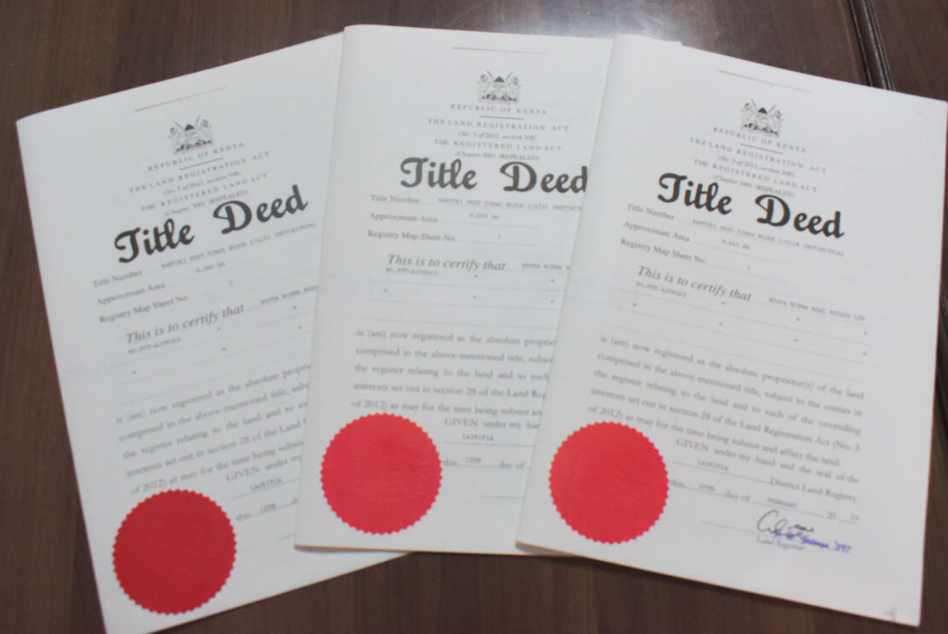
A title deed (formally called a Certificate of Title or Certificate of Lease depending on the tenure type) is a government-issued legal document that confirms who owns a specific parcel of land in Kenya. It contains:
- The Land Reference Number (LR Number) or Plot Number uniquely identifying the parcel
- The registered owner’s name
- The size of the land in hectares or acres
- The tenure type — freehold or leasehold
- Any encumbrances, caveats, or charges registered against the land (e.g., bank mortgages)
Without a title deed, you cannot legally prove ownership of land in Kenya. Banks will not accept undocumented land as collateral for loans. County governments may not process building approvals. Courts cannot adjudicate land disputes without reference to the title. In short, the title deed is your land’s most critical document.
The Land Laws That Govern This Process
Kenya’s land registration is governed primarily by:
- The Land Registration Act, 2012 (LRA) — the primary law on registration of titles
- The Land Act, 2012 — governs land transactions and administration
- The National Land Commission Act, 2012 — establishes the National Land Commission (NLC)
- The Constitution of Kenya, 2010 — Articles 60–68 on land policy
Types of Land Tenure in Kenya
Understanding your tenure type is essential before applying, as it determines which registry handles your land and what documents are issued.
1. Freehold Title
You own the land outright and permanently with no time limit. A freehold title deed (Certificate of Title) is issued. Most agricultural land in rural Kenya is freehold.
2. Leasehold Title
You have the right to use the land for a fixed number of years — typically 50 or 99 years for urban/commercial land — after which it reverts to the government unless renewed. A Certificate of Lease is issued. Most plots in urban centres (Nairobi, Mombasa, Nakuru, Kisumu) are leasehold.
3. Community Land
Owned collectively by a community under the Community Land Act, 2016. Registered in the name of the community, not individuals.
4. Public Land
Owned by the government. Citizens can apply for allocation through the National Land Commission.
Get High Paying Surveys
Earn money online by completing simple surveys. No experience needed.
Start Earning →Reasons You May Need to Apply for a Title Deed
People apply for title deeds in Kenya for different reasons. Each has a slightly different process:
- First registration — Land that has never been formally registered (common in rural areas and newly surveyed plots)
- Transfer of ownership — Buying land from someone else and transferring the title to your name
- Replacement of a lost or destroyed title — Applying for a new title deed when the original has been lost, stolen, or damaged
- Transmission — Transferring a title deed to heirs after the registered owner dies (succession/inheritance)
- Subdivision — Splitting one title into multiple smaller titles when dividing land
- Discharge of charge — Removing a bank mortgage from the title after repaying a loan
This guide covers the four most common scenarios in detail: title transfer after purchase, first registration, replacement of a lost title, and transmission through succession.
The Ardhisasa Platform — Kenya’s Digital Land Registry
In 2021, the Ministry of Lands launched Ardhisasa (ardhisasa.go.ke), a digital platform for land services. As of 2026:
- Nairobi land transactions are primarily processed through Ardhisasa
- Counties outside Nairobi are being progressively onboarded — some are live on the platform, others still use physical registries
Before starting your application, check whether your land’s county is on Ardhisasa. If it is, you will do most of the process online. If it is not, you will need to visit the relevant Land Registry office in your county.
How to Create an Ardhisasa Account
- Go to ardhisasa.go.ke
- Click “Register”
- Enter your National ID number, full name, phone number, and email address
- Create a password and submit
- Verify your account via the OTP sent to your phone
- Log in to access land services
Part 1: How to Do a Land Search in Kenya
Before buying land or initiating any land transaction, you must conduct an official land search to confirm who the registered owner is and whether there are any encumbrances (loans, caveats, or disputes) on the title.
Never buy land without doing an official search first. A land search is what protects you from fraudsters who sell land they do not own or that is already mortgaged to a bank.
Land Search via Ardhisasa (Nairobi)
- Log in to ardhisasa.go.ke
- Click “Land Search” or “Official Search”
- Enter the Land Reference Number (LR No.) of the parcel you are searching
- Pay the search fee — KES 500 — via M-Pesa (Paybill number generated on screen)
- The official search results are generated immediately or within 24 hours
- Download the search certificate showing the registered owner, plot details, and any encumbrances
Land Search at a Physical Land Registry (Outside Nairobi)
- Visit the Land Registry office in the county where the land is located
- Fill in a Search Request Form
- Pay the search fee at the cash office — KES 500
- The registry officer conducts the search manually and issues a Search Certificate — this typically takes 1 to 5 working days
A land search certificate is valid for 30 days from the date of issue. Conduct your search close to the time of transaction, not months in advance.
Part 2: How to Transfer a Title Deed After Purchasing Land in Kenya
This is the most common title deed process — you have bought land and need to move the title from the seller’s name into yours.
Step 1: Conduct an Official Land Search
As described above, search the land before you pay any money. Confirm the seller is the registered owner and there are no caveats or charges on the title.
Step 2: Engage a Conveyancing Advocate
Kenyan law requires that land transfers be handled by a licensed advocate (lawyer) who is experienced in conveyancing. Do not attempt a land transfer without one — incomplete or incorrectly executed transfer documents cause registries to reject applications.
The advocate’s fees are regulated by the Advocates Remuneration Order as a percentage of the land value:
| Land Value | Advocate’s Fee |
|---|---|
| Up to KES 5 million | Minimum KES 35,000 |
| KES 5M – KES 20M | Approximately 1.25% of value |
| Above KES 20M | Negotiable, typically 1% |
Step 3: Execute a Sale Agreement
Your advocate drafts a Sale Agreement between the buyer and seller setting out the purchase price, payment terms, and conditions of the sale. Both parties sign. A deposit (usually 10–20% of the purchase price) is typically paid at this stage.
Step 4: Apply for Land Rent and Rates Clearance Certificates
Before a transfer can be registered, you must confirm the seller has no outstanding land debts:
- Land Rent Clearance Certificate — issued by the National Land Commission confirming all annual land rent is paid up. Apply at any NLC county office or online at landcommission.go.ke. Fee: KES 500 (may vary). Processing: 2–7 working days.
- Land Rates Clearance Certificate — issued by the county government where the land is located, confirming all county land rates (property taxes) are paid. Apply at the county government revenue offices. Fee and processing time vary by county.
These certificates confirm the land is debt-free and ready for transfer. Do not proceed to registration without both.
Step 5: Pay Stamp Duty
Stamp duty is a government tax on land transfers. It is calculated as a percentage of the market value of the land (not necessarily the purchase price — the government uses its own valuation):
| Location | Stamp Duty Rate |
|---|---|
| Urban areas | 4% of land value |
| Rural areas | 2% of land value |
Example: If you are buying land in Nairobi valued at KES 5,000,000, stamp duty = 4% × KES 5,000,000 = KES 200,000.
How to Pay Stamp Duty
- Your advocate submits the transfer documents to the Commissioner of Domestic Taxes at KRA for assessment of the stamp duty amount
- KRA issues an assessment notice
- Pay the assessed amount via KRA iTax at itax.kra.go.ke or at any KRA-authorised bank
- KRA stamps the transfer documents as proof of payment
See also: How to Apply for a Passport in Kenya
Step 6: Prepare and Execute Transfer Documents
Your conveyancing advocate prepares the Land Transfer Form (Form RL 1 under the Land Registration Act). Both the seller and buyer must sign this form in the presence of a witness. The advocate then prepares the full transfer bundle including:
- Completed and signed Land Transfer Form
- Original title deed (the seller’s copy)
- Land Rent Clearance Certificate
- Land Rates Clearance Certificate
- Stamp duty payment receipt / stamped documents
- Official search certificate
- Copies of both parties’ National IDs and KRA PINs
- Two passport photos of the buyer
Step 7: Lodge the Application at the Land Registry
For Nairobi Land (Ardhisasa)
Your advocate uploads all documents to Ardhisasa and submits the transfer application online. The system assigns a reference number for tracking.
For Land Outside Nairobi (Physical Registry)
The advocate submits the physical document bundle at the relevant county Land Registry. The registry issues a Lodge Number (also called a Lodgement Number) — keep this safe as it is how you track your application.
Step 8: Registration and Issuance of New Title Deed
The Land Registrar reviews the documents. If everything is in order:
- The old title deed in the seller’s name is cancelled
- A new title deed in the buyer’s name is registered and issued
Processing time: 30 to 60 working days in most counties, though Nairobi through Ardhisasa can be faster. During periods of high volume, this may extend to 90 days.
You will be notified when the title is ready for collection. The new title deed is collected at the Land Registry office (or downloaded from Ardhisasa for Nairobi).
Part 3: How to Apply for a Title Deed for the First Time (First Registration)
If you own land that has never been formally registered — common in rural Kenya and land inherited through customary law — you must go through the first registration process.
Step 1: Engage a Licensed Land Surveyor
Have a licensed surveyor demarcate and survey the land. The surveyor will:
- Plant boundary beacons on the corners of the plot
- Prepare a survey map of the land
- Register the survey with the Survey of Kenya
This step is mandatory — the Land Registry will not accept an application without survey data. Surveyor fees vary widely: KES 20,000 to KES 150,000+ depending on the size and location of the land.
Step 2: Obtain a Land Control Board (LCB) Consent (If Required)
For agricultural land, transfers and first registrations may require consent from the Land Control Board — a local committee that governs agricultural land transactions. LCB meetings are held monthly at the sub-county level. Apply through your sub-county Land Control Board office.
LCB consent fee: KES 1,000 per application. Processing: usually resolved at the next monthly meeting.
Step 3: Apply at the Land Registry
Submit the following at the relevant county Land Registry:
- Survey map from the licensed surveyor
- Evidence of ownership (sale agreement, inheritance documents, allocation letter, or adjudication records)
- Copies of your National ID and KRA PIN
- Passport photos
- Completed application form (obtain from the registry)
- Applicable registration fees
Step 4: Government Inspection and Valuation
A government valuer may visit the land to determine its market value (for stamp duty purposes). This is done by the Chief Government Valuer’s office under the Ministry of Lands.
Step 5: Title Deed Issuance
Upon approval, the Land Registrar opens a new register for the parcel, assigns a title number, and issues the title deed in your name. Processing: 60 to 120 days depending on the registry’s workload.
Part 4: How to Replace a Lost or Destroyed Title Deed in Kenya
Losing a title deed is alarming but manageable. The process to replace it involves several steps designed to prevent fraud.
Step 1: Report the Loss to the Police
Visit your nearest police station and report the lost title deed. Obtain a Police Abstract (police report) confirming you reported the loss. This is mandatory.
Step 2: Publish a Notice in the Kenya Gazette
You must publish a notice in the Kenya Gazette announcing the loss of the title deed and your intention to apply for a replacement. This gives any interested parties (e.g., someone who may have found it) time to object.
- The Gazette is published every Friday
- Apply for publication at the Government Printer, Haile Selassie Avenue, Nairobi, or through their website
- Cost: KES 1,000 to KES 3,000 depending on the notice size
- You must wait 60 days after the Gazette notice before the Registry can issue a replacement
Step 3: Conduct a Land Search
Conduct an official search to confirm the current status of the title and that no fraudulent activities have occurred since the loss. Pay KES 500 at the registry or through Ardhisasa.
Step 4: Apply for a Replacement Title at the Land Registry
Submit the following to the Land Registry:
- Signed application letter requesting a replacement title
- Copy of the Police Abstract
- Copy of the Kenya Gazette notice showing your publication
- Official search certificate
- Statutory Declaration (sworn affidavit) explaining the circumstances of the loss — prepared by an advocate and sworn before a Commissioner for Oaths
- Copy of National ID and KRA PIN
- Two passport photos
- Applicable fees
Step 5: Registry Review and Issuance
The Land Registrar reviews the application, verifies there are no objections from the Gazette notice period, and issues a replacement title deed marked “Certificate of Title (Duplicate)”. Processing: 30 to 60 days after the 60-day Gazette waiting period.
Part 5: Title Deed Transfer Through Succession (Inheritance)
When the registered owner of land dies, the title must be transferred to the heirs through a legal process called transmission.
Step 1: Apply for a Grant of Probate or Letters of Administration
The heirs must apply to the High Court (through the Probate and Administration Division) or a Magistrate’s Court (for smaller estates) for either:
- Grant of Probate — if the deceased left a written will
- Letters of Administration — if the deceased died without a will (intestate)
This process is handled by an advocate and typically takes 3 to 12 months depending on the complexity of the estate and whether all heirs agree.
Step 2: Apply for Transmission at the Land Registry
Once the court grant is issued, apply at the Land Registry with:
- Certified copy of the Grant of Probate or Letters of Administration
- Death certificate of the deceased (certified copy)
- Original title deed
- Land search certificate
- Land Rent and Land Rates Clearance Certificates
- National IDs of all beneficiaries
- Completed transmission form
Step 3: New Title Issued
The Land Registrar cancels the deceased’s title and issues new titles to the beneficiaries as determined by the court grant or the will. If land is being subdivided among multiple heirs, each heir receives their own title.
Read also: How to Apply for a Driving License in Kenya
Land Title Deed Fees Summary (2026)
| Service | Fee (Approximate) |
|---|---|
| Official Land Search | KES 500 |
| Land Rent Clearance Certificate | KES 500 |
| Land Rates Clearance Certificate | Varies by county |
| Stamp Duty (urban land) | 4% of land value |
| Stamp Duty (rural land) | 2% of land value |
| Title deed registration fee | KES 5,000 – KES 10,000 |
| Replacement title (government fees) | KES 5,000 – KES 10,000 |
| Kenya Gazette notice (lost title) | KES 1,000 – KES 3,000 |
| Land survey (first registration) | KES 20,000 – KES 150,000+ |
| LCB Consent | KES 1,000 |
| Conveyancing advocate fee | KES 35,000+ (regulated) |
All fees above are approximate and subject to revision. Always confirm the current fee schedule at your Land Registry office or on Ardhisasa.
Common Mistakes to Avoid
1. Buying land without doing an official search first This is how most land fraud happens in Kenya. Always search the land at the official registry before handing over any money — not after. A seller who resists your request for a search should be treated as a red flag.
2. Dealing with brokers who claim to expedite title deeds There is no legal shortcut to title deed processing. Anyone who asks for money to “speed up” your file at the registry — outside of the official fee structure — is engaging in corruption. Report such individuals to the Ethics and Anti-Corruption Commission (EACC) at eacc.go.ke.
3. Not verifying that beacons match the title Before completing a land purchase, physically visit the land with the seller and a surveyor. Confirm that the physical boundaries and beacons on the ground match the measurements shown on the title deed and survey map. Discrepancies are common and can lead to boundary disputes after purchase.
4. Signing a transfer form before paying the full purchase price Never execute the Land Transfer Form or hand over the original title deed to the buyer before you have received full payment. Use an advocate’s client account (escrow arrangement) to hold funds until transfer documents are safely lodged at the registry.
5. Ignoring encumbrances on the title A land search may show a caveat (a legal notice preventing transfer), a charge (a bank mortgage), or an injunction on the title. These must be resolved before transfer can proceed. Never proceed with purchase when encumbrances are showing on the search — the seller must clear them first.
6. Not following up on your lodged application Once documents are lodged, many people assume the registry will call when the title is ready. This does not always happen. Follow up at the registry every 2–3 weeks using your lodge number.
Tips to Speed Up Your Title Deed Application
- Use Ardhisasa for Nairobi land — the digital process is significantly faster than the physical queue at Ardhi House
- Ensure all documents are complete before lodging — a single missing document returns the entire file and restarts your waiting period
- Obtain your clearance certificates early — land rent and rates clearances can take a week or more; apply for them while your advocate is preparing transfer documents
- Pay stamp duty promptly — delays in stamp duty payment are one of the most common causes of slow transfers
- Engage an experienced conveyancing advocate — an advocate who knows the registry officers and processes will navigate the system more efficiently than a general practice lawyer
Frequently Asked Questions (FAQs)
1. How long does it take to get a land title deed in Kenya? For a standard transfer, expect 30 to 90 working days from the date of lodgement. First registrations and succession transfers take longer — up to 6 months in some cases. Nairobi transactions on Ardhisasa tend to be faster than physical registries.
2. What is the difference between a title deed and an allotment letter? An allotment letter is issued by a government agency (like the National Land Commission or a county government) allocating land to someone. It is not proof of ownership — it is only the first step. You must process the allotment into a formal title deed through the Land Registry before you legally own the land. Many Kenyans make the mistake of treating an allotment letter as a title deed.
3. Can I transfer land without a lawyer in Kenya? Technically no — the Land Registration Act requires a licensed advocate to handle land transfers. Attempting to lodge transfer documents without an advocate typically results in rejection at the registry desk.
4. What is a Land Reference Number (LR Number) and where do I find it? The LR Number is the unique identifier for a land parcel in Kenya’s land register. It appears on the title deed itself, on the survey map, and on the land search certificate. If you are buying land, ask the seller to show you the original title deed so you can note the LR number before conducting your search.
5. Can a foreigner own land in Kenya? Foreigners can hold leasehold interests in land in Kenya (up to 99 years) but cannot hold freehold title. This is enshrined in Article 65 of the Constitution of Kenya, 2010. A foreigner wishing to buy land will receive a leasehold certificate rather than a freehold title deed.
6. What is a caution or caveat on a title deed and what do I do about it? A caution is a notice registered on a title by an interested party (e.g., a spouse, co-owner, or creditor) warning the registry not to deal with the land without their consent. A caveat is similar but is typically placed by court order. If a caution shows on your search, the buyer should require the seller to remove it formally before proceeding. Removal requires the consent of the cautioner or a court order.
7. How do I check if land is genuine before buying in Kenya? Conduct an official land search at the registry using the LR Number. Visit the land physically and confirm beacons match the title. Cross-check the seller’s name on the title with their National ID. Ask your advocate to conduct due diligence on the seller’s chain of ownership. For added security, check whether the land is in a contested area or falls within a government road reserve or riparian land.
Conclusion
The land title deed process in Kenya is detailed and requires patience, but it is entirely navigable when you understand each step. Whether you are transferring a title after purchase, registering land for the first time, replacing a lost document, or processing an inheritance — the key to success is preparation: get an experienced conveyancing advocate, conduct your land search before paying anything, obtain your clearance certificates early, and follow up on your application regularly.
Kenya’s shift to the Ardhisasa digital platform is making land transactions faster and more transparent, particularly for Nairobi. As more counties come online, the process will continue to improve.
Start by conducting your official land search today at ardhisasa.go.ke or at your county Land Registry — it is the single most important step before any land transaction in Kenya.
Read also:
- How to Apply for a Driving License in Kenya
- How to Apply for a Passport in Kenya
- How to Register for SHA in Kenya
- How to File KRA Returns Online
Get High Paying Surveys
Earn money online by completing simple surveys. No experience needed.
Start Earning →